The List of Books


We awarded points for each selection – 10 points for a first place pick, nine points for a second place pick, and so on. Then we totaled up all the points and ranked them accordingly. Here are all the books ordered by the number of points each earned. In the parentheses are the initials of the authors that selected them and the points earned. Click on their initials to see their list. 

Harold and the Purple Crayon by Crockett Johnson (1955). “One night Harold decided to go for a walk in the moonlight.” But there was no moon. So the little boy drew one with his purple crayon. Then he drew a path to walk on. Soon he was using his purple crayon to create real adventures in the forest, ocean, and the air, before drawing a bead for home and bed. Creative, resourceful, and full of surprising purpose, Harold and his trusty crayon reveal the imagination’s power to remake the world.

Total Points: 1 (RPow 1)

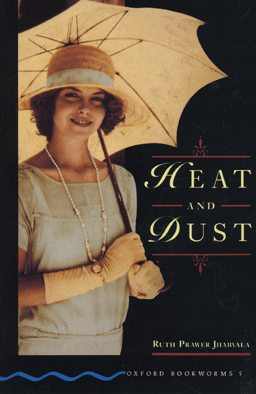
Heat and Dust by Ruth Prawer Jhabvala (1975). In 1920s India, the wife of an English officer strangled by propriety falls for a minor prince with a taste for crime. She aborts their child and leaves her husband. Fifty years later, her ex-husband’s granddaughter returns to India to investigate the scandal. Through these two women Jhabvala suggests how the past informs the present, while presenting a vivid picture of India.

Total Points: 1 (HaJ 1)

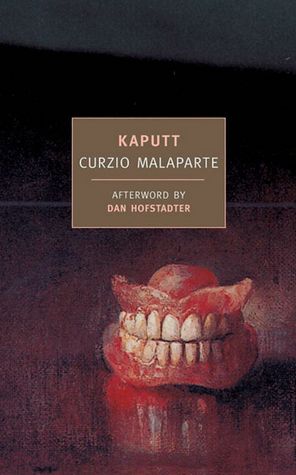
Kaputt by Curzio Malaparte (1944). Troubled by corruption in Rome, Malaparte embraced fascism as a young man. He soon wised up, and his Italian newspaper reports on the eastern front during World War II led the fascists and Nazis to imprison him. Kaputt, an episodic novel drawn from his reportage, juxtaposes the decadence of fascist leaders with harrowing depictions of war, including the murder of Jews in Romania, the siege of Leningrad, and Malaparte’s famous image of horses frozen on Lake Ladoga.

Total Points: 1 (AF 1)

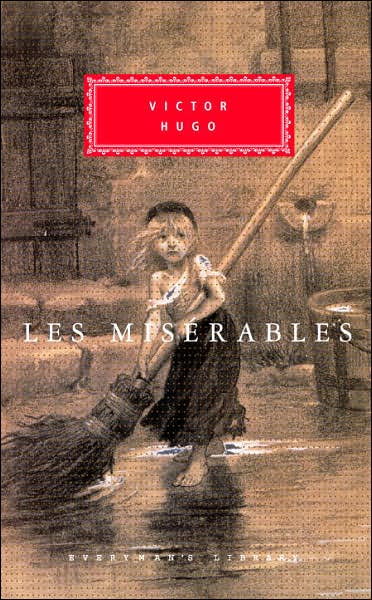
Les Misérables by Victor Hugo (1862). Twenty years in the writing, this masterpiece of melodrama sweeps across unspeakable poverty, assumed identities, the sewers of Paris, and the battle of Waterloo while also making time for love, politics, architecture, history, and Hugo’s burning invective against social inequities. The novel’s central struggle—between good-hearted prison escapee Jean Valjean and the indefatigable, by-the-book detective Javert—is about the need to temper the law with mercy and redemption, qualities often sorely lacking in Hugo’s time.

Total Points: 1 (CB 1)

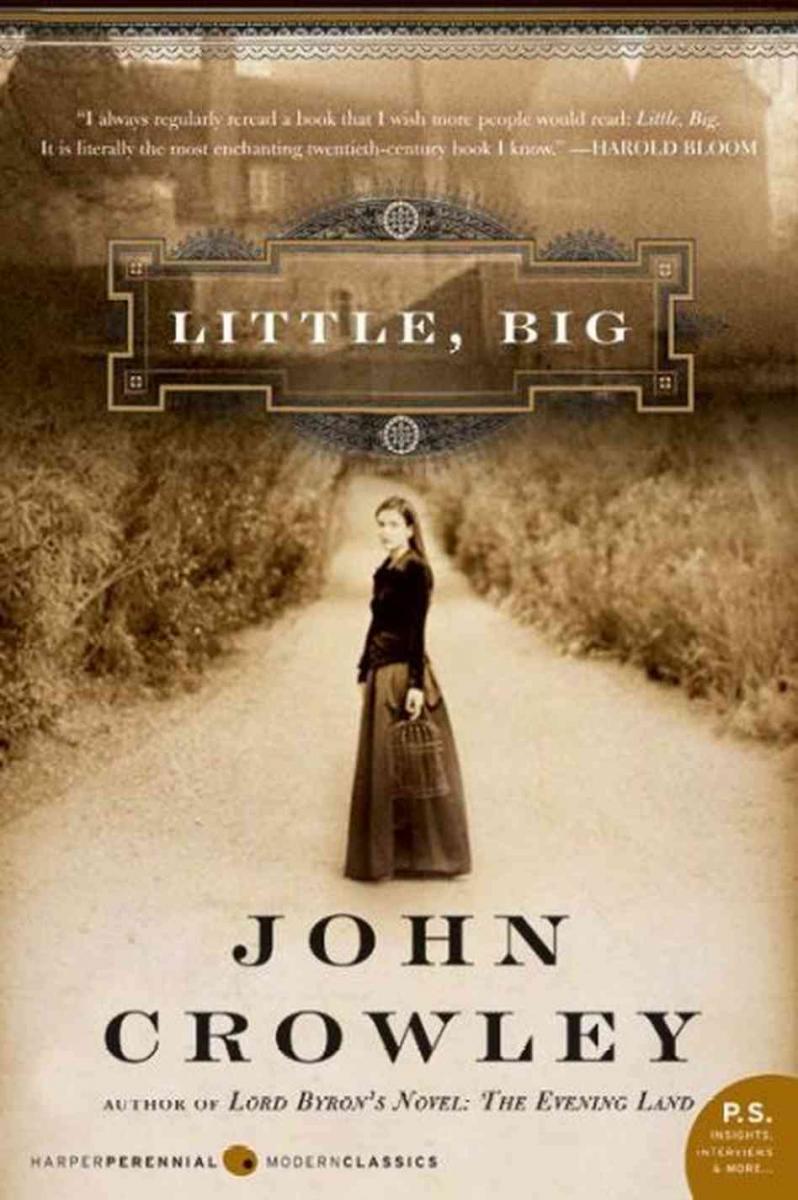
Little, Big by John Crowley (1981). When Smoky Barnable marries Daily Alice Drinkwater, in a pagan ceremony attended by guests seen and not seen, he enters a strange and magical family. Through the pages of this multigenerational fantasy epic, Crowley details the Drinkwater family’s connection to the world of Faerie—“the further in you go, the bigger it gets”—and the tale that shapes their fate.

Total Points: 1 (HK 1)

Masters of the Dew by Jacques Roumain (1947).

Appreciation of Jacques Roumain’s Masters of the Dew by Edwidge Danticat

This novel charmed Langston Hughes and Mercer Cook so much that when they visited Haiti in the 1940s they decided to translate it. Theirs remains the only English translation. This is the plot: A Haitian young man goes to Cuba to cut sugarcane in the 1930s. When he returns to his village in rural Haiti, he finds that a drought has ravaged the entire area and a Romeo and Juliet–type feud between the two most powerful families stands in the community’s way of finding a solution.

Like Romeo, the young man, Manuel, falls in love with the stunning daughter of the family that despises his and a battle ensues that results in tragedy, with some measure of hope. (To say much more would be giving away too much of the plot of this slim volume.) The book has often been called a peasant novel, but it is also an environmental novel, as well as a love story.

I read this book when I was ten years old; it was the first novel in which I recognized people I knew living in circumstances similar to my life and my world. It was also the first time that I realized books could not only help us escape but hold a mirror to our lives, to help us examine a problem and ponder—along with the characters—a possible solution. It was my first engagée or socially engaged novel, one that showed me that the novel could have many roles, that fiction could be used for different purposes without losing its artistic merit. It made me want to write the types of books that could inform and entertain as well as help others live, through a powerful narrative, a heartbreaking, painful, and even redemptive experience.

Total Points: 1 (ED 1)
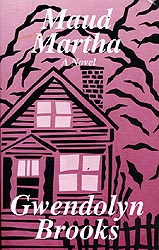
Maud Martha by Gwendolyn Brooks (1953). Brooks is best known for her poetry about African American life in Chicago, winning the Pulitzer Prize for Annie Allen (1949). In Maud Martha, Brooks switches to prose fiction, recounting the stages of a young woman’s life during the 1930s and 1940s. The story follows Maud as she struggles with school, work, marriage, childbirth, and motherhood against the all-pervasive backdrop of racism and sexism. Told with unflinching honesty, sensitivity, and humor, Maud Martha is also a work of lyrical beauty.

Total Points: 1 (SC 1)

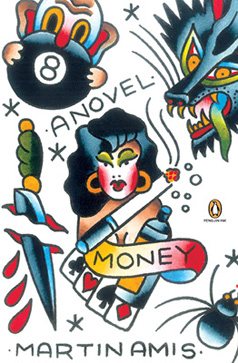
Money by Martin Amis (1984). Subtitled “A Suicide Note,” this novel follows the death spiral of hedonistic film director John Self as he wrestles with Hollywood stars, New York producers, a flauntingly unfaithful London girlfriend, an anonymous ca.ller that seems to be coming from inside his head, and the writer Martin Amis. Money marries Amis’s comic talents and his preoccupation with the self-annihilating twilight of civilization.

Total Points: 1 (CH 1)

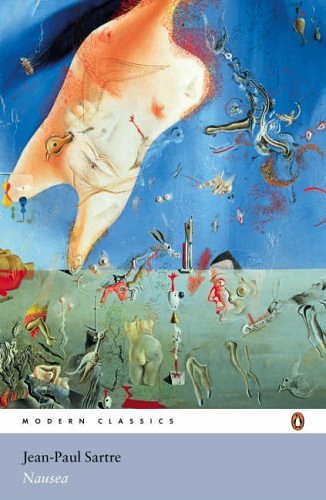
Nausea by Jean-Paul Sartre (1938). Thisis the story of Antoine Roquentin, a French writer who is horrified at his own existence. In impressionistic, diary form he ruthlessly catalogues his every feeling and sensation. His thoughts culminate in a pervasive, overpowering feeling of nausea which "spreads at the bottom of the viscous puddle, at the bottom of our time—the time of purple suspenders and broken chair seats; it is made of wide, soft instants, spreading at the edge, like an oil stain." Roquentin's efforts to come to terms with life, his philosophical and psychological struggles, give Sartre the opportunity to dramatize the tenets of his Existentialist creed.

Total Points: 1 (JHUMP 1)

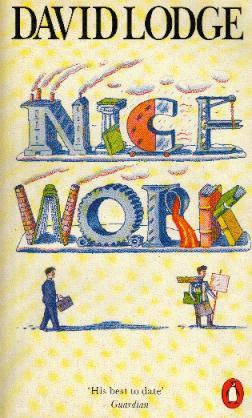
Nice Work by David Lodge (1988). Opposites attract in this third volume of Lodge’s campus trilogy that includes Changing Places (1975) and Small World (1984). A British government program aimed at bridging the gap between the academy and industry pairs a leftist feminist academic and a hard-driving businessman. Their relationship turns from hostility to respect in this comic novel that uses snippets from nineteenth-century English novels to explore divisions in society and literature’s power to bring people together.

Total Points: 1 (IP 1)

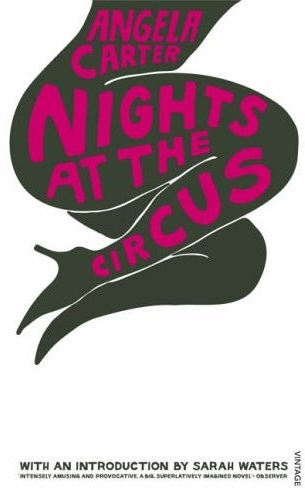
Nights at the Circus by Angela Carter (1984). Nineteenth-century London, St. Petersburg, and Siberia are the three rings of Carter’s surrealist circus starring Fevvers, a trapeze artist with wings. As the bewitching Fevvers describes her life of brothels, freak shows, mad noblemen, and flying fame in high-octane Cockney slang, Carter also gives voice to a host of other characters, including the strong man, the lion tamer, and Sybil the pig. When a journalist tries to expose Fevvers as a hoax, this comic novel with feminist overtones becomes a meditation on identity and storytelling.

Total Points: 1 (PE 1)

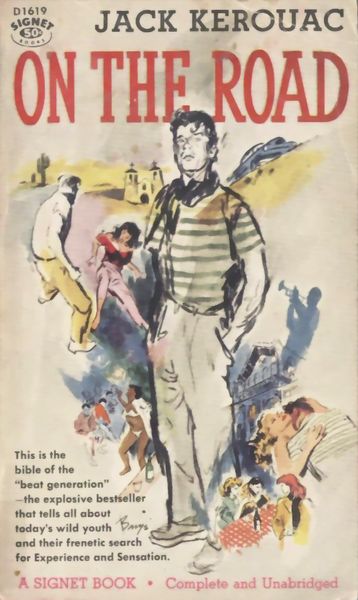
On the Road by Jack Kerouac (1957). The ur-novel of the Beat generation, Kerouac mythologizes an America that is always just over the next hill or waiting in the next bar, the next town, the next bottle, or a lover’s bed, and “the mad ones” who chase such visions. Fueled by postwar recklessness and a desire for kicks, Sal Paradise and Dean Moriarty hitchhike and ride trains, but mostly they drive nonstop from coast to coast, seeking music, a tank of gas, new lovers, whatever they can find. Composing on a scroll of butcher paper run through a typewriter, Kerouac sought a language that would match the velocity of his characters and their exploits.

Total Points: 1 (GS 1)

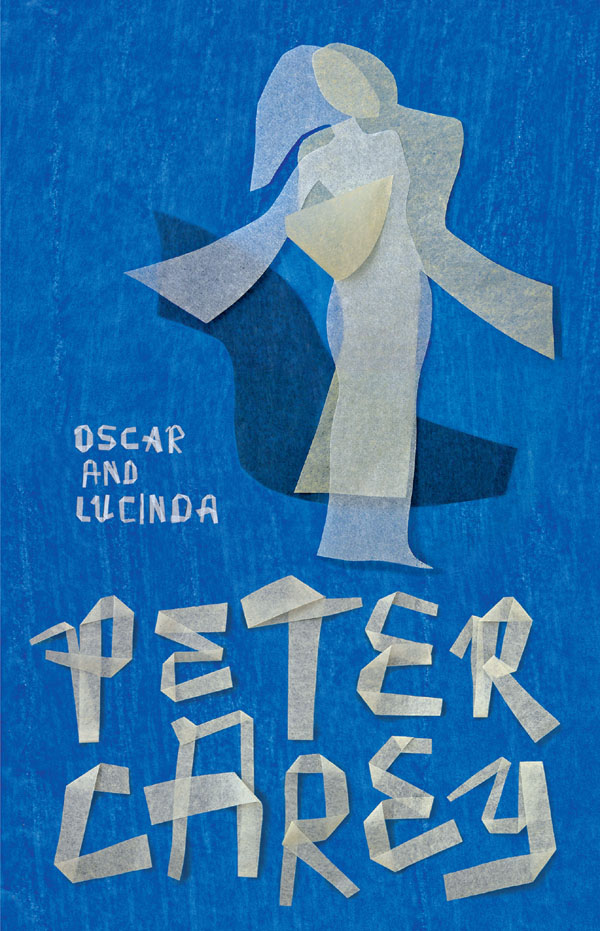
Oscar and Lucinda by Peter Carey (1988). Carey explores some of his favorite themes—chance, risk, and dreams—in this Booker Prize–winning novel. Set in nineteenth-century England and Australia, it uses Dickensian details and set pieces to chronicle the lives of two protagonists who share a love of gambling: an English clergyman who has broken with his past and an Australian heiress with utopian dreams. This unconventional love story climaxes with a bold yet fragile scheme: to move a crystal church across the Australian outback.

Total Points: 1 (CM 1)

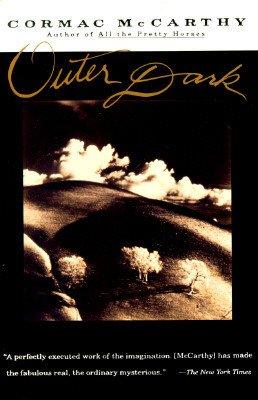
Outer Dark by Cormac McCarthy (1968). Outer Dark is a dark, Gothic tale set in Appalachia around the turn of the twentieth century. A woman is impregnated by her brother, who steals the child, leaves it in the woods, and tells her it has died of natural causes. She learns of her brother’s lie; separately they set out across the dangerous wilds to find the child, embarking on strange and chilling journeys informed by evil, dread, and mercy.

Total Points: 1 (MGri 1)

Parables and Paradoxes by Franz Kafka (1935). Composed after the author’s death of snippets from his novels, stories, notebooks, and letters, this collection ranges widely—from short pieces on Sancho Panza and Robinson Crusoe to Poseidon and Abraham. As he retells, often with dark humor, some of the West’s central myths, Kafka entertains as he reminds us that every story suggests another story.

Total Points: 1 (SO’N 1)

Pictures from an Institution by Randall Jarrell (1954). What happens when a brilliant poet writes a campus comedy? You get this lacerating look at academic pretensions and jealousies. Set in a women’s liberal arts college, the tale centers on Gertrude Johnson, a professor writing a novel about the “little people,” who has no clue about “what it was like to be a human being.” This somewhat plotless novel proves the perfect vehicle for Jarrell’s acid wit; every page boasts some beautifully put put-down, as here: “People did not like Mrs. Robbins, Mrs. Robbins did not like people; and neither was sorry.”

Total Points: 1 (CS 1)

Portnoy’s Complaint by Philip Roth (1969). “I am the son in the Jewish joke,” Alexander Portnoy quips, “only it ain’t no joke.” Narrated as a confession to a doctor, the novel portrays Portnoy’s life as a long and tentative escape from the world of his hard-working, constipated father and his overbearing mother. Outrageous and frank in its treatment of sex, family, and Jewishness, this controversial novel is also a tale of generational shift, a rare ode to masturbation, and a stage for Roth’s usual nostalgia: “so piercing is my gratitude—yes, my gratitude!—so sweeping and unqualified is my love.”

Total Points: 1 (WK 1)

Rites of Passage by William Golding (1980). The first volume of Golding’s sea trilogy, this Booker Prize–winning novel is set on an early nineteenth-century ship bound for Australia. The story, told through the journal entries of aristocrat Edmund Talbot, centers on the death of a parson on board. But the plot is secondary in this deeply observed, highly atmospheric tale that tackles three of the Nobel laureate’s favorite themes—the British class system, the nature of cruelty, and the sea.

Total Points: 1 (BU 1)

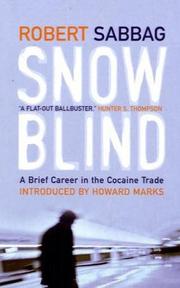
 Snowblind: A Brief Career in the Cocaine Trade by Robert Sabbag (1998). Tom Bissell calls this “an impossibly stylish and gripping real-life thriller about life in the cocaine trade.”

Total Points: 1 (TBiss 1)

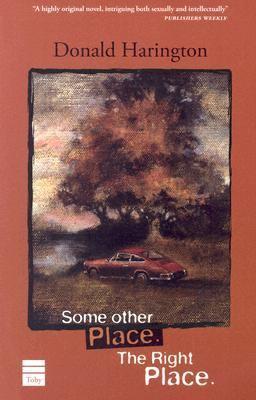
Some Other Place. The Right Place by Donald Harington (1972). This picaresque road novel with a ghostly twist centers on a young woman, a recent college graduate, and a shy eighteen-year-old boy who might be the reincarnation of an exuberant poet. Together they light out to learn about the dead man’s life and death; visits to his old haunts showcase Harington’s gift for describing the natural world. As the couple’s bond turns to love, the dead man’s spirit comes ever closer.

Total Points: 1 (DH 1)

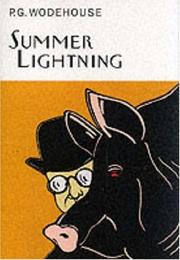
Summer Lightning by P. G. Wodehouse (1929). In more than ninety comic novels graced with odd names and perfectly weighted sentences, Wodehouse imagined a daft world of British privilege. He wrote many different series of books built around specific characters, including Mr. Mulliner, Psmith, Ukridge, and his most famous creations, Bertie Wooster and Jeeves. One of the Blandings Castle novels, Summer Lightning is an intricate farce that displays Wodehouse’s penchant for anchoring his humor in ridiculous yet common circumstance—here it is a local competition to find the best pig—while exploring his great themes: social decorum and love.

Total Points: 1 (JR 1)

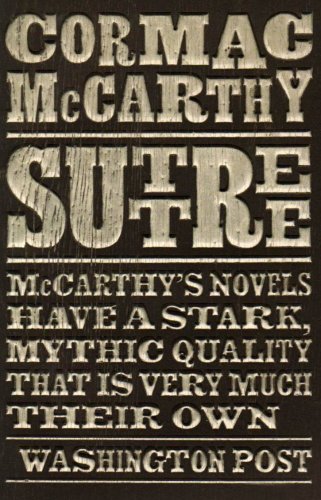
Suttree by Cormac McCarthy (1979).This novel tells the story of Cornelius Suttree, who has forsaken a life of privilege with his prominent family to live in a dilapidated houseboat on the Tennessee River near Knoxville.  Remaining on the margins of the outcast community there--a brilliantly imagined collection of eccentrics, criminals, and squatters--he rises above the physical and human squalor with detachment, humor, and dignity.

Total Points: 1 (RRash 1)

Taking Care by Joy Williams (1982).

Total Points: 1 (BW 1)


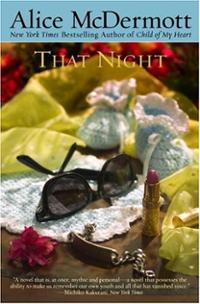
That Night by Alice McDermott (1987). Primal emotions surge beneath the veneer of 1960s suburban placidity in McDermott’s searing tale of innocence lost. With her teased hair and elaborate makeup, teenage Sheryl epitomizes glamour. But after her father dies, Sheryl becomes pregnant and is sent away, precipitating a violent confrontation between the neighborhood men and Sheryl’s aggrieved boy­ friend. McDermott’s exquisite and haunting rendering of the painful revelations of youth and the mysteries of death and sex is mythic in its resonance.

Total Points: 1 (AS 1)

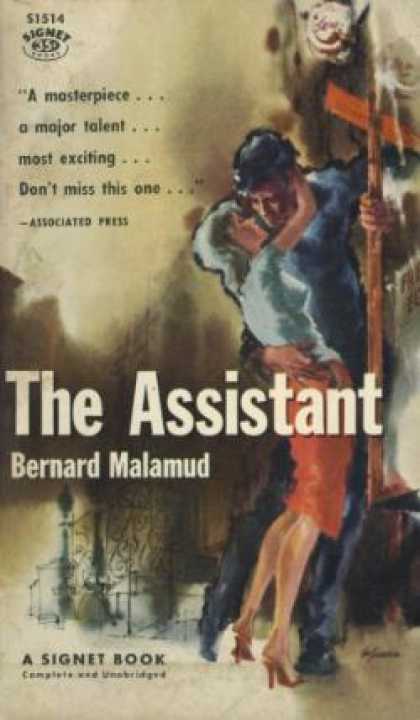
The Assistant by Bernard Malamud (1957). New York shopkeeper Morris Bober will do anything to support his family, except compromise the best values drawn from his Jewish faith. He is sad, and his family suffers, as they struggle to maintain their integrity in a grasping postwar world. The arrival of a new assistant, an Italian with a checkered past named Frank, presents complications (he falls in love with Bober’s daughter) and opportunities, as Malamud develops a surprising father–son relationship that suggests people are essentially good.

Total Points: 1 (HJ 1)

The Book of Ebenezer Le Page by G. B. Edwards (1981). The delight of this novel, set in England’s Channel Islands, is the cranky voice of its eponymous narrator. Recalling his long life on the isolated island, the farmer/fisherman Le Page describes his world on a local scale: family squabbles, romances, deaths. But history on a grander scale intrudes through the German occupation during World War II. “What a big fool this world is,” Le Page declares in an account of human folly suffused with wisdom.

Total Points: 1 (RPri 1)

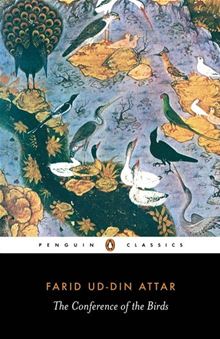
The Conference of the Birds by Farid ud-Din Attar. A lyrical tale about the desire to become one with the divine, this epic allegory by the twelfth-century Sufi mystic follows a group of birds who vow to find the legendary Simurgh bird. Their limitations and faults—the basis for rich parables—are revealed through their quest, which has long inspired readers to begin their own spiritual journeys.

Total Points: 1 (MSB 1)

The Fever by Wallace Shawn (1990). In this play, a narrator's visit to a beautiful country is marred by political struggles which force him to not only review the presumptions of a "liberal" existence in the face of harsh, murderous reality but also to question his own existence.

Total Points: 1 (TJ 1)

The Human Stain by Philip Roth (2000). Mentioning two students who never come to class, seventy-one-year-old professor Coleman Silk asks, “Do they exist or are they spooks?” The students are black, and Silk is soon engulfed in a racially charged campus controversy that may expose his secret life. The imbroglio also sparks Silk’s libido, and he begins an affair with one of Roth’s most finely drawn female characters, an illiterate janitor. An attack on political correctness, the novel also explores Roth’s signature theme: the quest for personal identity free from society’s labels and expectations.

Total Points: 1 (APat 1)

The Hunchback of Notre Dame by Victor Hugo (1831). Hugo’s grand populist opera stars the cathedral and medieval Paris itself as much as the hunchbacked bell-ringer Quasimodo, whose unrequited love for the gypsy dancer Esmeralda ends very, very badly. The book is far more nineteenth century than fifteenth, brimming with melodrama, anticlericism, and Hugo’s characteristic outrage at social injustice. The novel’s huge popularity in France was instrumental in a neo-Gothic revival there, as well as the preservation of Notre Dame itself.

Total Points: 1 (MGait 1)

The Old Wives’ Tale by Arnold Bennett (1908). This is the tale of two sisters, shy Constance, who never strays from her rural English home, and adventurous Sophia, who marries and moves to Paris. Through absorbing depictions of their ordinary lives, which includes a masterful depiction of English provincial life and mores, Bennett suggests how character shapes destiny and how every destiny is fascinating.

Total Points: 1 (MD 1)

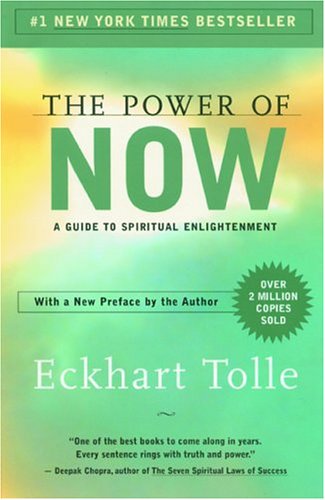
The Power of Now: A Guide to Spiritual Enlightenment by Eckhart Tolle (1997).

Beginning with his own spiritual crisis at age twenty-nine, Tolle describes how he achieved enlightenment by learning to live “present, fully, and intensely, in the Now.” Drawing on a variety of traditional teachings and techniques, Tolle urges readers to shed their attachments to the past, the future, and “the myriad forms of life that are subject to birth and death argues,” showing them how to tap into “consciousness in its pure state prior to identification with form.”

Total Points: 1 (CD 1)

The Prelude by William Wordsworth. Wordsworth wrote this poem three times, in 1799, 1805, and finally in 1850. The subject matter, his own life, was endlessly fascinating to him. Of greater interest today is Wordsworth’s theory of “spots of time,” moments or hours so illuminated by memory we revisit them throughout our lives. Wordsworth’s childhood ramblings through the English countryside, his education, walking tours of England and Scotland, and his witnessing of the Paris Rebellion are all captured here, yet this poem is less narrative than meditation by a poet determined to “have felt whate’er there is of power in sound.”

Total Points: 1 (AHas 1)

The Railway Children by E. Nesbit (1906). This hopeful and heartbreaking tale begins when the father of three children is taken away one night by the authorities. Their resourceful mother tells them they must leave London for the country, where they will “play at being poor for a while.” Their adventures on and off the railway lines near their new home are touched with melancholy, as they long for and wonder about their missing father.

Total Points: 1 (KA 1)

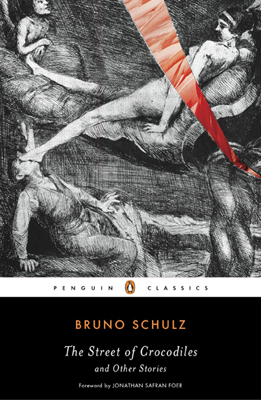
The Street of Crocodiles by Bruno Schulz (1934). Out of his childhood experiences in the Polish city of Drogobych, Schulz (who was also an artist and a Jew) fashioned this fantastical semiautobiographical short story collection in which his father becomes a bird, a year has thirteen months, and the very furniture is aquiver with kinesthetic metaphor and the sudden transformational power of dreams. The book is one of the few surviving works of Schulz, who was murdered by a Nazi officer in Drogobych in 1942.

Total Points: 1 (JBud 1)

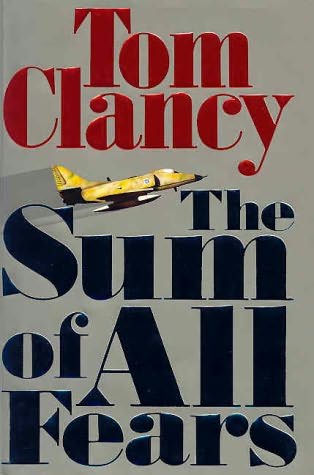
The Sum of All Fears by Tom Clancy (1991). The Cold War meets the age of terror in this pulsing techno thriller. Hoping both to derail Israeli–Palestinian peace and darken U.S.–Soviet relations, terrorists smuggle a nuclear weapon into the United States. Only one man can save the day, Clancy’s series hero, Jack Ryan, a CIA agent racked by personal and professional problems. Clancy brandishes his encyclopedic knowledge of the military—including plans for building a hydrogen bomb—while capturing a hero filled with doubt.

Total Points: 1 (DFW 1)

The Talented Mr. Ripley by Patricia Highsmith (1955). Since his debut in 1955, Tom Ripley has evolved into the ultimate bad boy sociopath. Here, in this first Ripley novel, we are introduced to suave Tom Ripley, a young striver, newly arrived in the heady world of Manhattan. A product of a broken home, branded a "sissy" by his dismissive Aunt Dottie, Ripley meets a wealthy industrialist who hires him to bring his playboy son, Dickie Greenleaf, back from gallivanting in Italy. Soon Ripley's fascination with Dickie's debonair lifestyle turns obsessive as he finds himself enraged by Dickie's ambivalent affections for Marge, a charming American dilettante. A dark reworking of Henry James's The Ambassadors, The Talented Mr. Ripleyprovides an unforgettable introduction to this smooth confidence man, whose talent for murder and self-invention is chronicled in four subsequent Ripley novels.

Total Points: 1 (CBollen 1)

The Thin Man by Dashiell Hammett (1932). Retired gumshoe Nick Charles returns to Manhattan with his new heiress wife Nora, and their schnauzer Asta. The couple is quickly drawn into an investigation of a missing inventor and his murdered mistress. Hammett’s comic talents and infectious, rapid-fire dialogue take the lead in this stylish, cocktail-fueled yarn.

Total Points: 1 (ST 1)

The White Tiger by Aravind Adiga (2008). The white tiger of this novel is Balram Halwai, a poor Indian villager whose great ambition leads him to the zenith of Indian business culture, the world of the Bangalore entrepreneur. On the occasion of the president of China’s impending trip to Bangalore, Balram writes a series of letters to him describing his transformation and his experience as driver and servant to a wealthy Indian family, which he thinks exemplifies the contradictions and complications of Indian society. This darkly comic novel The White Tiger recalls The Death of Vishnu and Bangkok 8 in ambition and scope, with a mischief and personality all its own it is an amoral, irreverent, deeply endearing, and utterly contemporary first novel.

Total Points: 1 (PShreve 1)

Ulverton by Adam Thorpe (1992). The fictional town of Ulverton—and the English language itself—are the central characters of this debut novel in which a dozen different voices detail three hundred years in the life of an English village. As he moves from the time of Cromwell to the 1980s in twelve rich chapters, Thorpe deploys language drawn from the period described. He also displays a mastery of literary form, inventing diary entries, sermons, drunken conversations, and film scripts to tell his story.

Total Points: 1 (EDon 1)

Watership Down by Richard Adams (1972). This imaginative epic chronicles the adventures of a band of English rabbits who possess their own language, history, and myth and who are searching for a new home after a human developer has destroyed their old one. Like the fables of Aesop, Watership Down is sneakily dark, full of drama and death and warnings about the fascist tendencies of the modern world, and explores moral ideas, including freedom and responsibility.

Total Points: 1 (DAD 1)

When I Grow Too Old to Dream, lyrics by Oscar Hammerstein (1935). Hammerstein’s credits are a history of the American musical, including Oklahoma, Carousel, South Pacific, The King and I, and The Sound of Music. He wrote this sweet love song, which has been recorded by everyone from Nelson Eddy to Nat King Cole to Doris Day, for the film The Night Is Too Young. The singer asks for a parting kiss, then adds, “And when I grow too old to dream / That kiss will live in my heart.”

Total Points: 1 (AT 1)