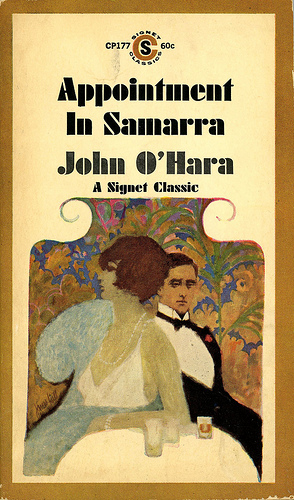
 Appointment in Samarra (1934) and BUtterfield 8 (1935) by John O’Hara. The man Brendan Gill credited with inventing The New Yorker short story also wrote nicely observed novels of cynical slumming and sexual frankness. Appointment in Samarra relates the long weekend in which a Cadillac dealer gleefully destroys his life; BUtterfield 8 follows a cheap-date actress through the ferocious demimonde of speakeasy New York.
The List of Books
We awarded points for each selection – 10 points for a first place pick, nine points for a second place pick, and so on. Then we totaled up all the points and ranked them accordingly. Here are all the books ordered by the number of points each earned. In the parentheses are the initials of the authors that selected them and the points earned. Click on their initials to see their list.
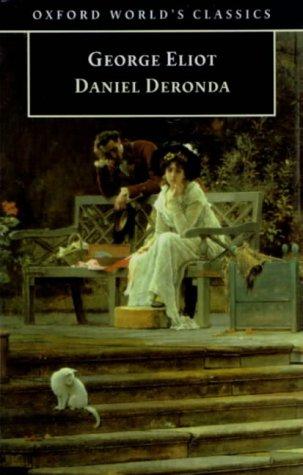 Daniel Deronda by George Eliot (1874–76). Daniel Deronda first sees Gwendolyn Harleth gambling at a fashionable resort and asks himself whether “the good or evil genius is dominant” in her. He is a man of ideas; she is an egotistical, spoiled girl. Can Daniel redeem her? Another character who needs saving is Mirah Cohen, yet through her, Daniel finds a form of salvation by discovering his hidden Jewish heritage in this novel that exposes the deeply rooted anti-Semitism of Victorian England.
 Love in the Time of Cholera by Gabriel García Márquez (1985). Márquez takes the love triangle to the limit in this story of an ever hopeful romantic who waits more than fifty years for his first love. When his beloved’s husband dies after a long, happy marriage, Florentino Ariza immediately redeclares his passion. After the enraged widow rejects him, he redoubles his efforts. Set on the Caribbean coast of Colombia, this wise, steamy, and playful novel jumps between past and present, encompassing decades of unrest and war, recurring cholera epidemics, and the environmental ravages of development.
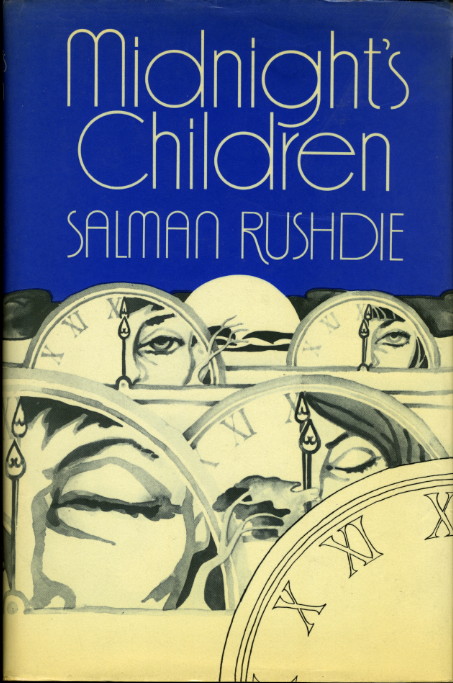 Midnight’s Children by Salman Rushdie (1981). Years before The Satanic Verses, Rushdie had already won the Booker Prize for this reverential and blasphemous novel. Two babies born at the precise moment modern India came into existence—one Muslim, one Hindu—are then switched at birth and grow up in the other’s faith. Midnight’s Children sets a plot of comic-book proportions—people with superpowers too lazy to band together—against the backdrop of the subcontinent’s conflict-ridden history, the language and idioms of Rushdie’s youth careening against each other with madcap imagination and jolting fury.
 Nothing (1926), Doting (1950), and Blindness (1952) by Henry Green. Green was the pen name for British industrialist Henry Vincent Yorke, whose kaleidoscopic, impressionistic novels (including cryptic plots and sentences without articles or verbs) have drawn comparisons to fellow high-modernists Gertrude Stein, Picasso, and Monet. Blindness details the terror of a blind young man confined to a room by his wife. Doting (a comedy of adulterous near-misses) and Nothing (about two ex-lovers whose children are getting married) consist almost entirely of pitch-perfect dialogue.
 Speak, Memory by Vladimir Nabokov (1951). The son of a Russian aristocrat who was assassinated for his belief in democracy, Nabokov had a preposterously privileged childhood, including teams of governesses and servants and sojourns along the Riviera. When the Bolsheviks arrived, the family was forced to flee amid a hail of bullets. Later, as a student at Cambridge, Nabokov confronted those who romanticized the politics that exiled him. Ricocheting through time, space, and subject matter as it delves whimsically into the author’s literary influences and the minutiae of family history, this is a masterpiece of literary memoir.
 The Golden Bowl by Henry James (1904).Great chess players used to test their skills by playing several matches at once. A similar sense of multiple levels and strategies animates James’s final completed novel. An impoverished Italian prince marries the daughter of a fabulously wealthy American art collector, who in turn marries the daughter’s best friend, who was once (unbeknownst to father and daughter) the prince’s lover. James examines one of his signature themes—the terrible vulnerability of love to betrayal—in this vertiginous, psychologically acute work.
 The Lover by Marguerite Duras (1984). This Prix Goncourt–winning work might now be considered an early “fictional memoir.” Drawn from Duras’s life in prewar Indochina, it tells the story of the ill-fated love between a young girl and her Chinese lover. Lyrical, imagistic, and structured in cumulative short passages, Duras combines the beautiful and the terrible in this slim, compelling novel.
 The Things They Carried by Tim O’Brien (1990). A Vietnam vet, O’Brien established himself as a chronicler of the war in nonfiction works such as If I Die in a Combat Zone (1973) and his National Book Award–winning novel Going After Cacciato (1978). In this, his crowning work, a character named “Tim” narrates a series of stories about himself and other young soldiers in his platoon who wrestle with the decision to go to war, walk through booby-trapped jungles, miss their loved ones, and grieve for their fallen comrades. Using simple, emotionally charged language, O’Brien explores the moral consequences and conundrums of the war through daily details, such as the things soldiers carry in their backpacks, and timeless issues, especially the scars they will always bear.
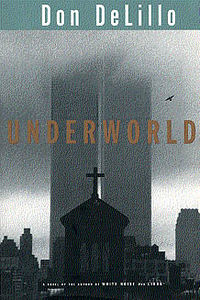 Underworld by Don DeLillo (1997). A finalist for the National Book Award, this literary page-turner is about the second half of the twentieth century in America and about two people, an artist and an executive, whose lives intertwine in New York in the fifties and again in the nineties. With cameo appearances by Lenny Bruce, J. Edgar Hoover, Bobby Thompson, Frank Sinatra, Jackie Gleason and Toots Shor, it has been called a “dazzling, phosphorescent work of art.”
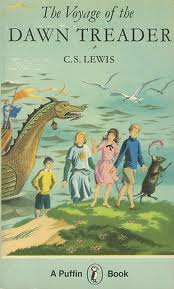 Voyage of the ‘Dawn Treader’ by C. S. Lewis (1952). In this, the third book of The Chronicles of Narnia, King Caspian sets sail to the end of the world to rescue the seven lost lords of Narnia. Along with three English children—who have come to Narnia this time by stepping into a painting—and other companions such as the brave, sword-wielding mouse Reepicheep, Caspian has numerous adventures that resonate with Christian and classical mythology.
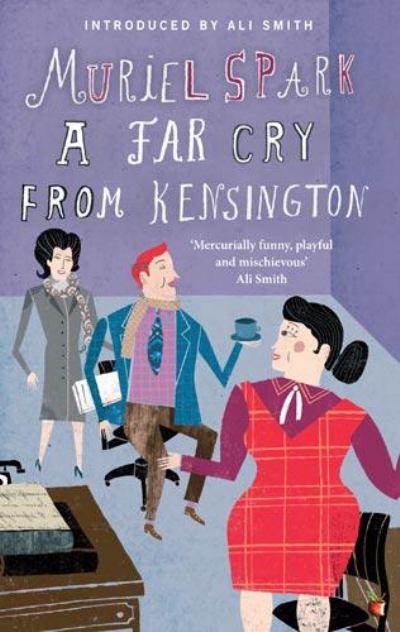 A Far Cry from Kensington by Muriel Spark (1988). Like all of Spark’s work, this novel is hard to define. Metaphysical farce? Literary mystery? At bottom it is a dark, elegant, hilarious tale centered on the zaftig widow Mrs. Hawkins. She spends her days and evenings giving advice to her eccentric rooming house mates and her coworkers in book publishing. Blackmail, suicide, and a crash diet power this story, but it is Spark’s all-too evident disgust with the business end of literature that gives the story its special kick.
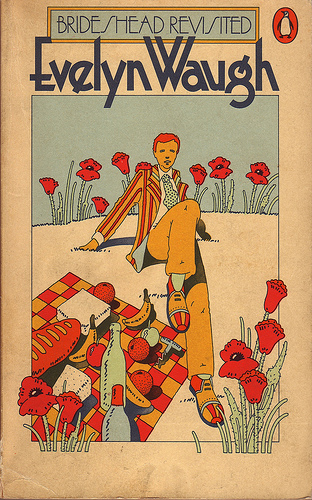 Brideshead Revisited by Evelyn Waugh (1945). Waugh was one of the twentieth century’s great satirists, yet this novel, widely considered his best, is not satiric. It is, instead, an examination of Roman Catholic faith as it is used, abused, embraced, and rejected by the Flytes, an aristocratic English family visited by alcoholism, adultery, and homoeroticism.
 Gravity's Rainbow by Thomas Pynchon (1973). Winner of the 1973 National Book Award, Gravity's Rainbow is a postmodern epic, a work as exhaustively significant to the second half of the twentieth century as Joyce's Ulysses was to the first. Its sprawling, encyclopedic narrative and penetrating analysis of the impact of technology on society make it an intellectual tour de force.
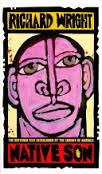 Native Son by Richard Wright (1945). Set in Chicago in the 1930s, this novel tells the story of Bigger Thomas, an African American twisted and trapped by penury and racism. Bigger is on his way out of poverty when he accidently murders his employer’s daughter, a white woman. In this highly charged, deeply influential novel, Wright portrays a black man squeezed by crushing circumstances who comes to understand his own identity.
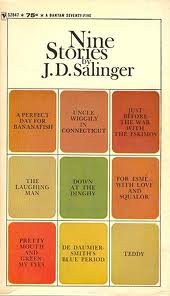 Nine Stories by J. D. Salinger (1953). Salinger gave his story collection the title Nine Stories, and that simple, enumerative title is just right, for the stories can be counted off like beads on a string: “For Esme with Love and Squalor,” “A Perfect Day for Bananafish,” and “Uncle Wiggly in Connecticut,” whose last line, “I was a good girl, wasnI?” never fails to break the reader’s heart. The pitch-perfect voices Salinger provides his characters make their dead-serious search for meaning taste like candy.
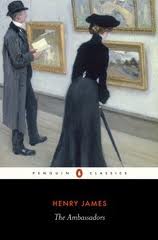 The Ambassadors by Henry James (1903). Middle-aged Lambert Strethers is sent to Paris to retrieve a young American whose wealthy parents fear he has taken up with an inappropriate woman, but Strethers sees that the young man is truly happy. Gradually, Strethers finds his flinty provincialism chipped away by Europe’s ease and freedom in this novel whose signature line reads, “Live all you can; it’s a mistake not to.”
 The Beginning of Spring by Penelope Fitzgerald (1988). “It is Jane Austen crossed with Chekhov and Turgenev,” observed A. S. Byatt of this witty domestic novel set in Moscow on the eve of war and revolution. In the spring of 1913, Frank Reid’s wife leaves him and their three children to return to England. Frank, who was born in Russia and runs the print shop his British father founded there, deplores change. Character, not plot, rules Fitzgerald’s fictions; with subtlety and insight she reveals him navigating his new circumstances (and hoping for his wife’s return) while dealing with a host of vividly drawn, often idiosyncratic characters.
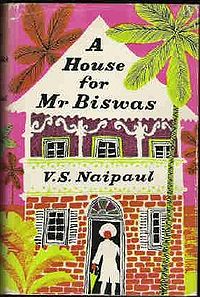 A House for Mr. Biswas by V. S. Naipaul (1961). An Indian man living in Trinidad, Mr. Biswas is a tenant in some houses and an unfavored relative in others. All he wants is a home of his own. His adult son narrates this story of his monumental search for a home and all that implies. The quest becomes a metaphor for the displacements of postcolonial life in this novel that, while filled with poverty and loneliness, is also a teeming, comic epic of Hindu life in Naipaul’s native West Indies.
 Airships by Barry Hannah (1978). Barry Hannah can make readers laugh about the grimmest subject while never for a second losing sight of the essential horror. In this story collection, the Mississippi writer creates a cast of scarred, hyperkinetic characters—including a Confederate soldier recalling the tragedy and glory of war to a contemporary man obsessed with his estranged wife—who are stumbling toward illumination.
 An American Tragedy by Theodore Dreiser (1925).Clyde Griffiths wants to be more than just the son of a Midwestern preacher. Leaving home, he follows a path toward the American Dream that is littered with greed, adultery, and hypocrisy. The brass ring seems close when he wins a wealthy girl’s love, but then very far away when a factory girl he impregnated demands that he marry her. In this disquieting social novel, Clyde faces a moral dilemma that reveals the corruption of his soul and the materialistic culture that seduces him.
 Answered Prayers by Truman Capote (1987). Unfinished and perhaps unfinishable at the time of Capote’s death in 1984, this roman à clef was his savage chomp at the hands that fed him—the manicured, diamond-freighted hands of Upper East Side socialites and assorted New York celebrities. Bitchiness, bile, and sexual braggadocio vie in this gossipy, literary vivisection of high society.
Total Points: 10 (DC 10)
 Antony and Cleopatra by William Shakespeare (1606). One of Shakespeare’s late Roman plays, Antony and Cleopatra has a sense of fading grandeur about it, as the great warrior Antony succumbs to the exotic luxuries of Egypt and the heady sexual powers of her queen Cleopatra, thus neglecting his duties to Rome. The play has a kind of baroque richness to both plot and language as Antony and Cleopatra delight in seclusion while the Roman forces opposing them, led by the sober and ambitious Octavius Caesar, close in on the lovers. Cornered, the emperor and queen bring the play to a suicidal climax that exquisitely fuses sexual pleasure and death.
Total Points: 10 (MD 10)
 Bhagavadgita (fifth century b.c.e.). An eighteen-chapter section of the Mahabharata, this “Song of God” is a dialogue between Prince Arjuna, a warrior on the battlefield, and the Supreme Lord Krishna, who appears as a charioteer. The two discuss the true self that is not destroyed in death and states of release from the human realm of suffering. As a cornerstone of Hindu faith and yogic philosophy, the Bhagavadgita has had a profound impact on philosophical and religious traditions in both the East and West.
Total Points: 10 (CD 10)
 Casa Guidi Windows by Elizabeth Barrett Browning (1851). The first part of this two-thousand-line poem, composed in 1847, reveals Browning’s excitement at the independence she and husband Robert found in Florence. The second part, written after Austria’s reoccupation of Tuscany, is a more reflective, yet still hopeful, meditation on the streets outside the Browning home, Casa Guidi: “This world has no perdition, if some loss.” Casa Guidi and its companion poems argue strongly for the right of women to speak on matters of politics and state, not just the moral affairs of the home.
Total Points: 10 (AT 10)
 Disgrace by J. M. Coetzee (1999). Fifty-two years old and twice divorced, Professor David Lurie thought the affair with his student might bring passion back to his life. Instead, it costs him his job and his friends when he refuses to repent his sin. He retreats to his daughter’s farm, hoping to build on their relationship and write about Byron. But his tranquil oasis is shattered by racial violence in this uncompromising novel by the South African Nobel laureate.
 Embers by Sándor Márai (1942). Henrik, a nobleman of the Austro-Hungarian Empire, and Konrad, a humble man with ambition, became best friends in military school. They remained inseparable, even after Henrik married Konrad’s friend. Then, one night, their relationship ruptured. Forty-one years pass until they meet again before the embers of a fading fire, where they probe their relationship and their lives.
Total Points: 10 (RW 10)
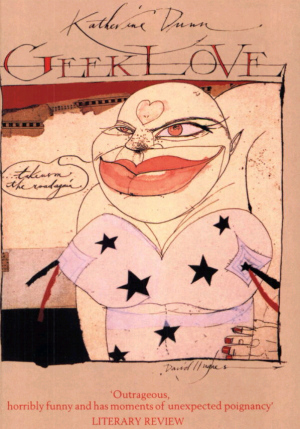 Geek Love by Katherine Dunn (1989). In this wild, oddball novel, Lily and Art Binewski purposely create a family of freaks and geeks by procreating under the influence of experimental drugs. This genetically altered “family” travels as a circus. Dunn’s carnival of misfits is a memorable, darkly funny, and emotionally trenchant portrait of love and family on the fringe.
Total Points: 10 (JW 10)
 Gone with the Wind by Margaret Mitchell (1936). Many sagas novels have been written about the Civil War and its aftermath. None take us into the burning fields and cities of the American South as Gone With the Wind does. This Pulitzer Prize-winning novel of love and war creates haunting scenes and thrilling portraits of remarkably vivid characters. Through the white-shouldered, irresistible Scarlett and the flashy, contemptuous Rhett, Mitchell not only conveyed a timeless story of survival under the harshest of circumstances, she also created two of the most famous lovers in the English-speaking world since Romeo and Juliet.
Total Points: 10 (JPico 10)
 I, Claudius by Robert Graves (1934). Here is everything you could want in a novel about ancient Rome: warfare and spectacle, scandal and intrigue (and still more intrigue). The Claudius of Graves’s imagination—a disarmingly charming pedant and reluctant tyrant—confides his beginnings as a crippled, unwanted child and the internecine dynastic struggles that left him the last man standing. It is soap opera on an epic scale, dramatizing the fall of Roman republican ideals.
Total Points: 10 (AGold 10)
 Ill Seen, Ill Said by Samuel Beckett (1981). In terse, haunting prose, Beckett’s novella meditates on the absurdities of life and death, our grim longing for happiness, and “that old tandem” of reality and its unnamable “contrary.” The narrative itself, boiled down to poetic reflections, focuses on an old woman enduring her last days in a remote cabin. In the end, though all is blackness and void, Beckett wishes on us “grace to breathe that void,” even momentarily.
Total Points: 10 (JB 10)
 JR by William Gaddis (1975). This formally unique, dense, National Book Award–winning novel is composed almost entirely of dialogue and reads like a stream of conversation. This satire of high finance features an eleven-year-old named JR who uses a pay phone and mail order scheme to build a vast business empire on paper with the help of a partner, a struggling composer named Bast who serves as the company’s public face.
Total Points: 10 (LMill 10)
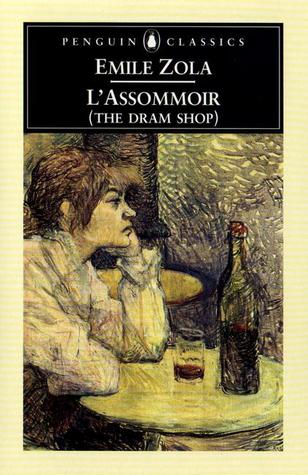 L’Assommoir (The Dram Shop) by Émile Zola (1877). Like Uncle Tom’s Cabin, this story—of the downfall of a Parisian laundress—turned a burning social issue into a sensational best-seller. The desperate alcoholism of Gervaise Lantier and her husband held a mirror to the shocking moral condition of the urban poor. But it is saved from mere didacticism by Zola’s eye and ear. The unbuttoned urban dialogue prefigures Celine and Henry Miller; the cinematic structuring of the novel’s great scenes suggests that Zola would have made a great film director.
Total Points: 10 (TW 10)
 Nana by Émile Zola (1880). Nana is a low-born courtesan who succeeds among the French elite. Zola meant his heroine to represent the corruption of the Second Empire under the twin stresses of hedonism and capitalism. But like some uncontrollable genie uncorked from a bottle, she becomes the greatest femme fatale since Helen of Troy. The most explicit of the classic nineteenth-century novels, Nana exists in the vital midpoint between Anna Karenina and Valley of the Dolls.
Total Points: 10 (TW 10)
 Olive Kitteridge by Elizabeth Strout (2008). Carolyn Leavitt writes: “Prickly Maine denizen Olive Kittridge presides over these stories, and she’s as awful as she is appealing. The novel unspools thirty years of relationships, illuminating small town life in Maine and the pain, panic and yearning of its people. What I love most about this book is that while women writers are sometimes falsely demeaned for not taking on the ‘big subjects’, Strout has shown there is nothing bigger or more important than the daily wonder of our lives.
Total Points: 10 (CL 10)
 Sentimental Education: The Story of a Young Man by Gustave Flaubert (1869). Based on Flaubert's own youthful passion for an older woman, this novel was described by the author as "the moral history of the men of my generation." It follows the amorous adventures of Frederic Moreau, a law student who, returning home to Normandy from Paris, notices Mme Arnoux, a slender, dark woman several years older than himself. It is the beginning of an infatuation that will last a lifetime. He befriends her husband, an influential businessman, and as their paths cross and re-cross over the years, Mme Arnoux remains the constant, unattainable love of Moreau's life in this love story which blends historical authenticity with sharp satire.
Total Points: 10 (BEE 10)
 Seven Pillars of Wisdom by T. E. Lawrence (1925). Lawrence feared that his account of the Arab revolt he helped lead against the Ottoman Empire during World War I was “too human a document.” His form of warfare, composed of Bedouin raids, heartened a generation sickened by the mechanized slaughter of Flanders Fields. This sexually ambiguous, daring archaeologist fascinates us for the same reason we still read The Iliad: our need for stirring examples of grace under pressure.
Total Points: 10 (AF 10)
 Strangers in Paradise: Stories by Lee K. Abbott (1986). A guilt-ridden father drumming World War II history into his son, a vet turned desperado, a golfer gone temporarily mad—all of Abbott's bold and reckless characters negotiate the bounds of acceptable human behavior with frequent missteps in this collection of 14 stories, filled with humor, pathos and desperation, many of which are set in the Southwest.
Total Points: 10 (TJ 10)
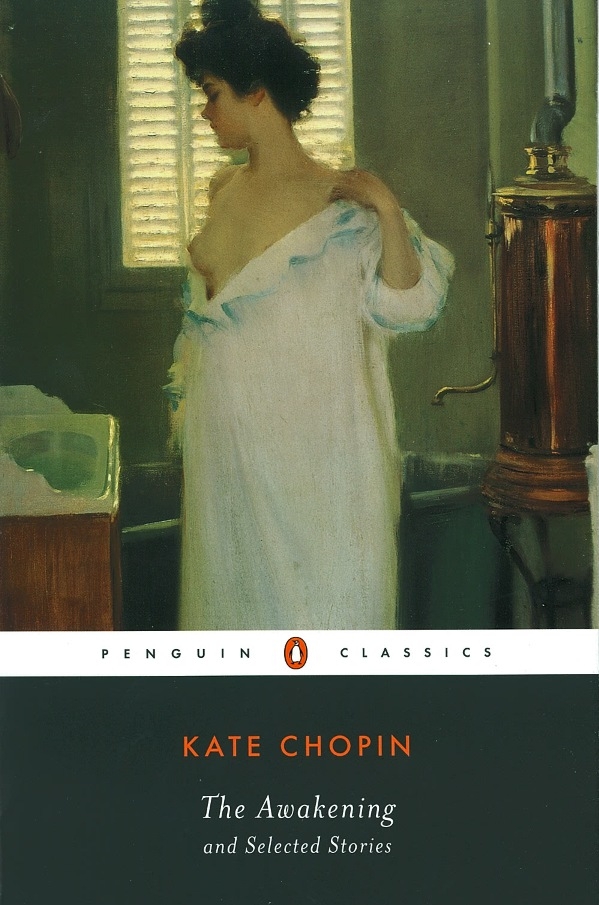 The Awakening by Kate Chopin (1899). A terribly shocking book in its day, The Awakening tells the story of an artistic, twenty-eight-year-old New Orleans woman who finds life with her husband and two children unfulfilling. On summer holiday, she has an affair with a younger man. Revived, she leaves her family. But her happiness is short lived as she is punished by a society that has little tolerance for such independent women.
Total Points: 10 (SMK 10)
 The Bacchae by Euripides (408–406 b.c.e.). “Gods should be exempt from human passions,” says Cadmus, but such is not the case for Dionysus in one of the goriest Greek tragedies. Dionysus seeks revenge on Cadmus’s grandson Pentheus, a Theban king who has tried to quash the Bacchus cult in Thebes. Dionysus seduces Pentheus into witnessing a Bacchanalian orgy, where he is torn to pieces by the revelers, including his own mother.
 The Baron in the Trees by Italo Calvino (1957).
Appreciation of Italo Calvino’s The Baron in the Trees by Daniel Wallace
The Baron in the Trees, by Italo Calvino, is the novel I think of as a singular and instrumental influence on me and my life as a writer. That being said, I read it decades ago I remember very little of it now: characters, plot points, major themes or motifs. Not really sure about those things. I do remember a dog, a woman, Voltaire . . . In a nutshell: in 1767 a strong-willed 12-year-old son of an Italian baron refuses to eat snails one night, is sent from the table, climbs an oak and swears never to come down – and doesn’t, not for the entirety of the novel. The rest of his life is lived in the trees. Which is impossible, but I believed every word of it. In fact, other than this one detail (that our main character traverses Europe, has friends and lovers and a dog without ever touching toe to ground) the story is told in the most realistic and historical detail. That is the great lesson I took from this book and from Calvino’s other books as well: that as long as the reader feels secure in the hands of an honest, forthright storyteller the writer can get on with the business of adornment and exaggeration, the making up of things that never happened, never could have happened, and never will, and the reader will believe that too. It’s called magical realism, but it might just as well be called realistic magic.
Total Points: 10 (DWall 10)
 The Birthday Party (1958) and The Homecoming (1965) by Harold Pinter. The Nobel Prize–winning master of menacing understatement subtly links exfoliating, abstract power struggles with banal domestic situations in two of his finest plays. The interrogation and abduction of a helpless (and perhaps guiltless) tenant makes The Birthday Party simultaneously celebrated as an ironic mockery of the phenomena of survival and continuity. In The Homecoming, a philosophy professor’s return to the domicile he and his wife share with his male relatives becomes a struggle for sexual dominance from which the lone woman emerges triumphant. The result is opaque, disturbing, enthralling drama.
Total Points: 10 (AMH 10)
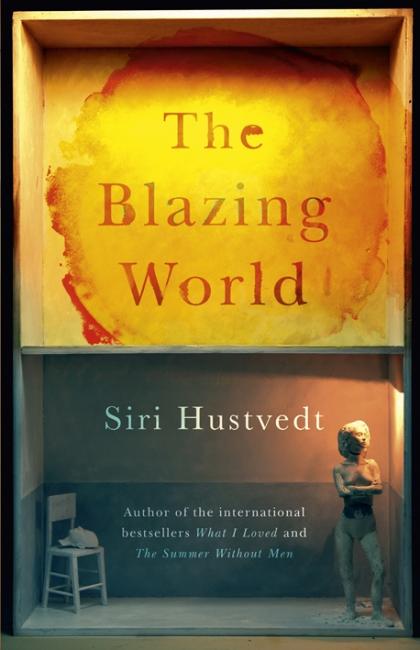 The Blazing World by Siri Hustvedt (2014). This provocative novel about perception, prejudice, desire, and one woman’s struggle to be seen tells the story of artist Harriet Burden, who, after years of having her work ignored, ignites an explosive scandal in New York’s art world when she recruits three young men to present her creations as their own. Yet when the shows succeed and Burden steps forward for her triumphant reveal, she is betrayed by the third man, Rune. Many critics side with him, and Burden and Rune find themselves in a charged and dangerous game, one that ends in his bizarre death. An intricately conceived, diabolical puzzle presented as a collection of texts, including Harriet’s journals, assembled after her death, it tells the tale from multiple perspectives as Harriet’s critics, fans, family, and others offer their own conflicting opinions of where the truth lies.
Total Points: 10 (AFilip 10)
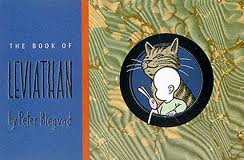 The Book of Leviathan by Peter Blegvad (2001). Snappy puns, clever palindromes, stream of consciousness insights, and brilliant non sequiturs fill the dialogue bubbles of this surreal collection of comic strips that chronicle the epistemological adventures of a faceless baby named Leviathan, his wise pet Cat, and his favorite toy Bunny. Sigmund Freud, Emily Dickinson, and St. Augustine are among the luminaries whose words inform these tales that explore the world’s mysteries and absurdities through a child’s eyes.
Total Points: 10 (MSB 10)
 The Children’s Bach by Helen Garner (1984). This novella tells the story of Athena and Dexter, a long married couple with a severely handicapped child whose predictable lives are stirred if not quite shaken when Dexter runs into an old friend, Elizabeth, who introduces three charming, if chaotic hangers-on into their lives. Garner’s astonishing minimalist prose moves seamlessly among points-of-view, weaving effortlessly between reality and desire to portray ordinary people who can’t quite find the words to articulate longings they aren’t quite sure of.
Total Points 10: (SMill 10)
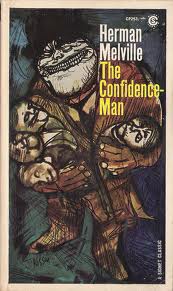 The Confidence-Man: His Masquerade by Herman Melville (1857). Truth, trust, and hope serve as plot and protagonist in this often comic, philosophical novel that anticipated postmodernism by a century. As the good ship Fidèle heads down the Mississippi, a long string of passengers—some modeled on Emerson, Thoreau, and Captain Ahab himself—encounter a shape-shifting confidence man who tells them exactly what they want to hear in order to get what he wants, in a work that raised doubt to an art form.
Total Points: 10 (ALK 10)
The Golden Argosy edited by Van H. Cartmell and Charles Grayson (1947).
Appreciation of The Golden Argosy by Stephen King
I first found The Golden Argosy in a Lisbon Falls (Maine) bargain barn called The Jolly White Elephant, where it was on offer for $2.25. At that time I only had four dollars, and spending over half of it on one book, even a hardcover, was a tough decision. I’ve never regretted it.
Originally published in 1947 and reissued in 1955—but not updated or reprinted since—The Golden Argosy is an anthology of roughly fifty-five short stories. The editors made no pretensions to “quality fiction,” but simply tried to publish the best-loved stories published in the nineteenth and twentieth centuries, up to the post–World War II period.
Though it is in terrible need of updating (there is no Raymond Carver, for instance, no Joyce Carol Oates, because such writers came along too late for inclusion), it remains an amazing resource for readers and writers, a treasury in the true sense of the word, covering everything from sentimental masterpieces such as Bret Harte’s “The Outcasts of Poker Flat” to realistic character studies such as “Paul’s Case” by Willa Cather.
Every reader will find glaring omissions (Dorothy Parker’s “Big Blonde,” for instance), but you’ve got your Faulkner classic (“A Rose for Emily”), your Hemingway (“The Killers”), and your Poe (“The Gold-Bug”). It includes “The Rich Boy,” in which F. Scott Fitzgerald famously observes “the rich are different from you and me,” and overlooked gems from writers such as Sherwood Anderson (“I’m a Fool”) and John Collier (“Back for Christmas”).
The Golden Argosy taught me more about good writing than all the classes I’ve ever taken. It’s the best $2.25 I ever spent.
Total Points: 10 (SK 10)
 The Outward Room by Millen Brand (1937). Also a poet, Brand wrote sensitively about mental illness when the topic was still taboo. This novel tells the story of a woman who escapes from a mental institution and tries to adjust to “normal” life on the “outside.”
Total Points: 10 (PCam 10)
 The Professor’s House by Willa Cather (1925). The professor’s house was “almost as ugly as it is possible for a house to be.” Now it has been dismantled. Yet the house, a symbol of the past, keeps beckoning Godfrey St. Peter, a professor in his mid-fifties whose outward success at work and home mask a passionless heart. “Theoretically he knew that life is possible, may be even pleasant, without joy. . . . But it had never occurred to him that he might have to live like that.”
 The Screwtape Letters by C. S. Lewis (1942). An amusing reversal of The Divine Comedy, this novel consists of letters from a senior devil (Screwtape) to his young nephew Wormword, teaching him how to tempt his first human “patient” to perdition. Lewis nicely balances theology and psychology, depicting hell as a bureaucracy with murderous office politics, and the loss of one’s soul as an imperceptible poisoning through chains of seemingly inconsequential sins.
Total Points: 10 (DFW 10)